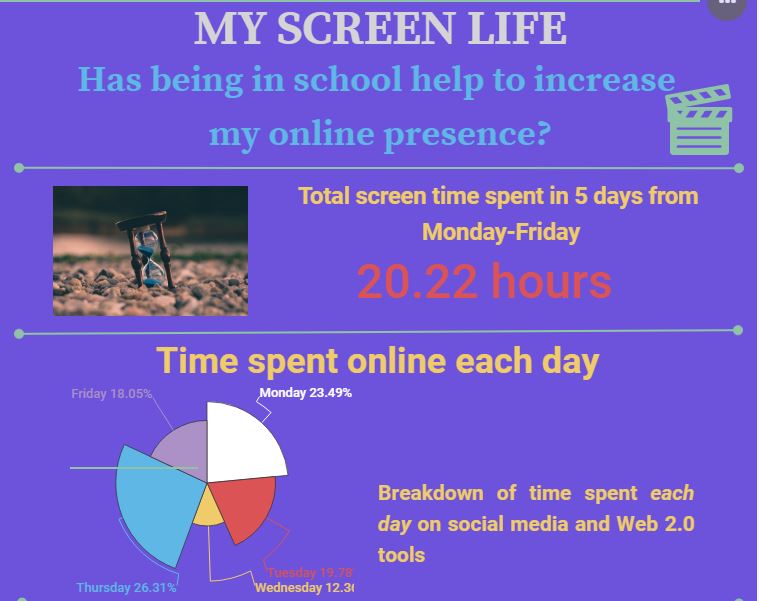
In the spring semester of this year, I had the opportunity to take a class called Social Media and Beyond at Northeastern University (NEU). One of my assignments was to track my social media use for five days which you can view here. Although this only covered a small fraction of the digital and media world, I was surprised at how much time I spent online especially for someone who rarely is on social media platforms. One of the reasons for this is because of privacy fears but that is a discussion for another day. True that I do spend more time online now than before since I started taking classes at NEU due to researching material online. So the twenty hours a day spent on social media does not include other types of media that I watch or read like on the television or books. This does not even include media (billboards and radio) that I am bombarded daily in my daily commute to work or just running errands. And when I return home, again I see media in the form of mailers when I go through our mail. Being surrounded by so much media either through the traditional or digital form, never once did my parents or teachers broach the subject of digital and media literacy. I wish someone did, so I could have been a more critical consumer instead of being a passive one. And not only that, I would have also been able to perhaps appreciate the author’s intent and the reason why that specific medium was used.
According to the Department of Commerce, ninety-six percent of American workers are exposed to communications technologies and sixty-two percent utilize the internet as part of they daily job responsibilities. This is on top of operating manuals, training materials or books that they have to encounter as well. I wonder how many of them were educated in digital and media literacy. I would venture to say not many. So who should be responsible to teach digital and media literacy skills? It is easy to point the finger at teachers. Who else would know the best way to teach students right? Well it is not easy as it seems. Think about the fact that most children today are already exposed to all sorts of media, digital or otherwise before they even step into pre-kindergarten or pre-school. With many households where both parents are working and juggling family life it is easy to have the television or iPad ‘babysit’ one’s children for a few hours while you cook, clean or pay the bills. And many parents read bedtime stories to young children before going to bed. The last thing on parents minds I bet is how to teach their children to be savvy media consumers. Lucky for them, there are resources out there to assist them as their children navigate this other world. YouTube kids is a popular site the parents allow children to visit and may feel a sense of comfort. However, there have been cases where these videos can quickly turn ugly so arming oneself on ways to protect your children is important.
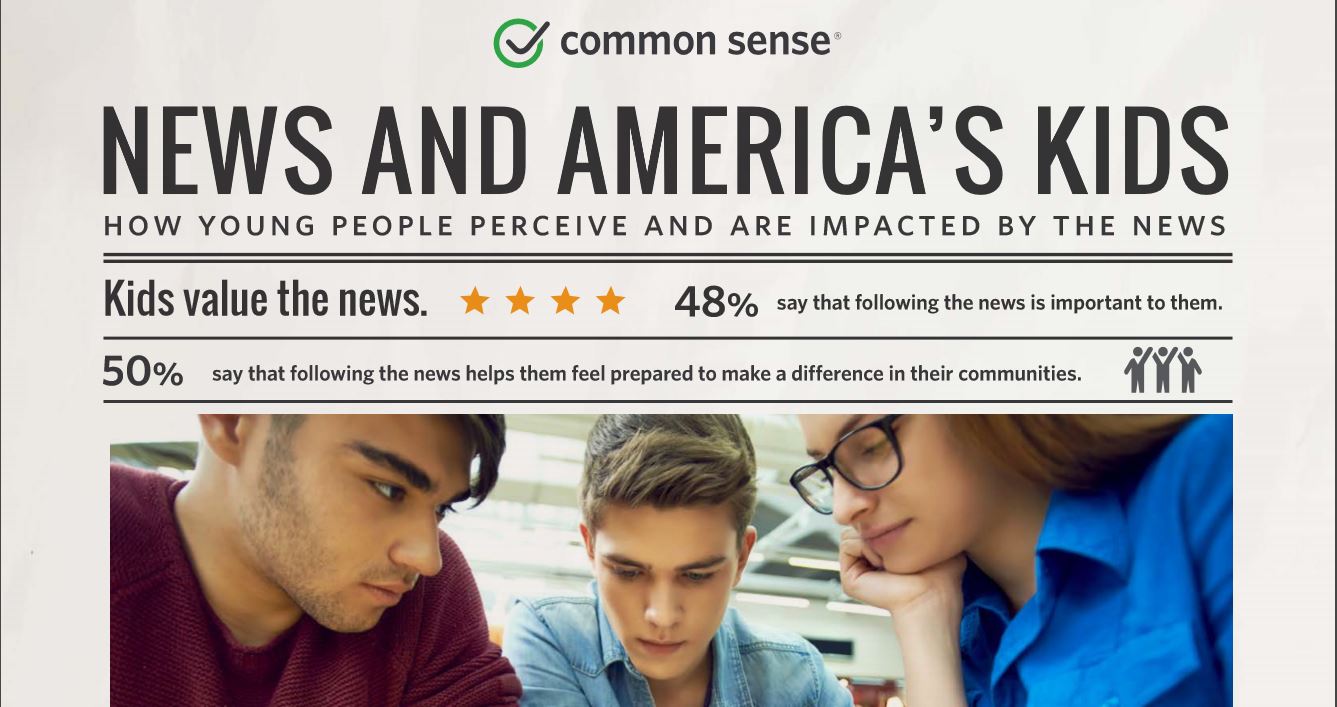
Many of us are exposed to news sources through social media. This infographic shows how consuming news affects children and teens. Fifty percent of them think by following the news, they are able to help their communities. So it is imperative that we teach them how to dissect the news from its source, content and intention. One of my favorite twitter followers is Vicky Davis @coolcatteacher who also blogs and I like her 9 Key Ps to digital citizenship that can help educators and parents alike. Since most children spend a third or more of their day in school, it is incumbent that teachers not be oblivious to what their students are saying or viewing. Staying on top of current events and being a part of your students discussions on what they are seeing or hearing can turn into teachable moments. The challenge for teachers is learning about digital and media literacy skills themselves and having the support of the school administration to take this subject seriously. This toolbox provided by commonsense.org can be a great way to get your feet wet.
Even the United Nations Educational, Scientific, and Cultural Organization (UNESCO) is taking media literacy seriously. They will be having a Global Media and Information Literacy Week in Gothenburg, Sweden in September this year. They are working on developing media and media literacy in eleven countries. There are curriculum that teachers can use as well as courses that individuals can take to educate themselves. Mirta Lourenço, Chief of Media Development and Society at UNESCO notes that, “the media affect our beliefs, our choices and how we live together” and “by encouraging the coverage of local issues and making people be critical in their interactions with media, we can help to build stronger and better-informed democracies.” This perfectly sums up why all of us not just educators should be a part of educating our children and one another in digital and media literacy. The question is how do we signal to everyday folks that the value of being critical, the ability to reflect and the consequence of participation in media digital or otherwise can make a significant difference in their lives.
References
Common sense www.commonsense.org
Davis, V. (2014). What Your Students Really Need to Know About Digital Citizenship. Retrieved from https://www.edutopia.org/blog/digital-citizenship-need-to-know-vicki-davis
National Telecommunications and Information Administration, U.S. Department of Commerce. Retrieved from https://digitalliteracy.gov/sites/digitalliteracy.gov/files/Digital_Literacy_Fact_Sheet_051311.pdf
UNESCO www.unesco.org
University of Beirut. Retrieved from http://milmooc.aub.edu.lb/
 Embrace Tech Education for Children